

Consistent Hot Water From Properly Installed Systems
Water Heater Installation in Jacksonville for replacing failed equipment and upgrading system capacity
Selecting and installing a water heater involves calculating household hot water demand, evaluating fuel sources, and meeting installation codes that govern venting, combustion air, electrical connections, and safety devices. Texas Plumbing Masters handles water heater installation across Jacksonville, Carthage, Bullard, and surrounding areas when existing equipment fails beyond economical repair or when homeowners want to upgrade from traditional tank systems to high-efficiency tankless units. Installation quality directly affects equipment lifespan and operating costs because improperly sized systems run constantly trying to meet demand, incorrectly vented combustion systems create safety hazards, and electrical connections that don't meet amperage requirements cause nuisance breaker trips and premature component failure.
Professional installation begins with evaluating peak hot water demand based on how many fixtures might run simultaneously, determining whether existing gas lines or electrical service can support new equipment, and calculating recovery rates needed to handle your usage patterns. Tankless systems require larger gas supply lines and upgraded electrical circuits compared to traditional tanks, while high-efficiency tank models need different venting configurations than standard atmospheric vent systems.
Request an installation estimate that includes equipment recommendations based on your household's actual hot water requirements.
What Proper Water Heater Installation Requires
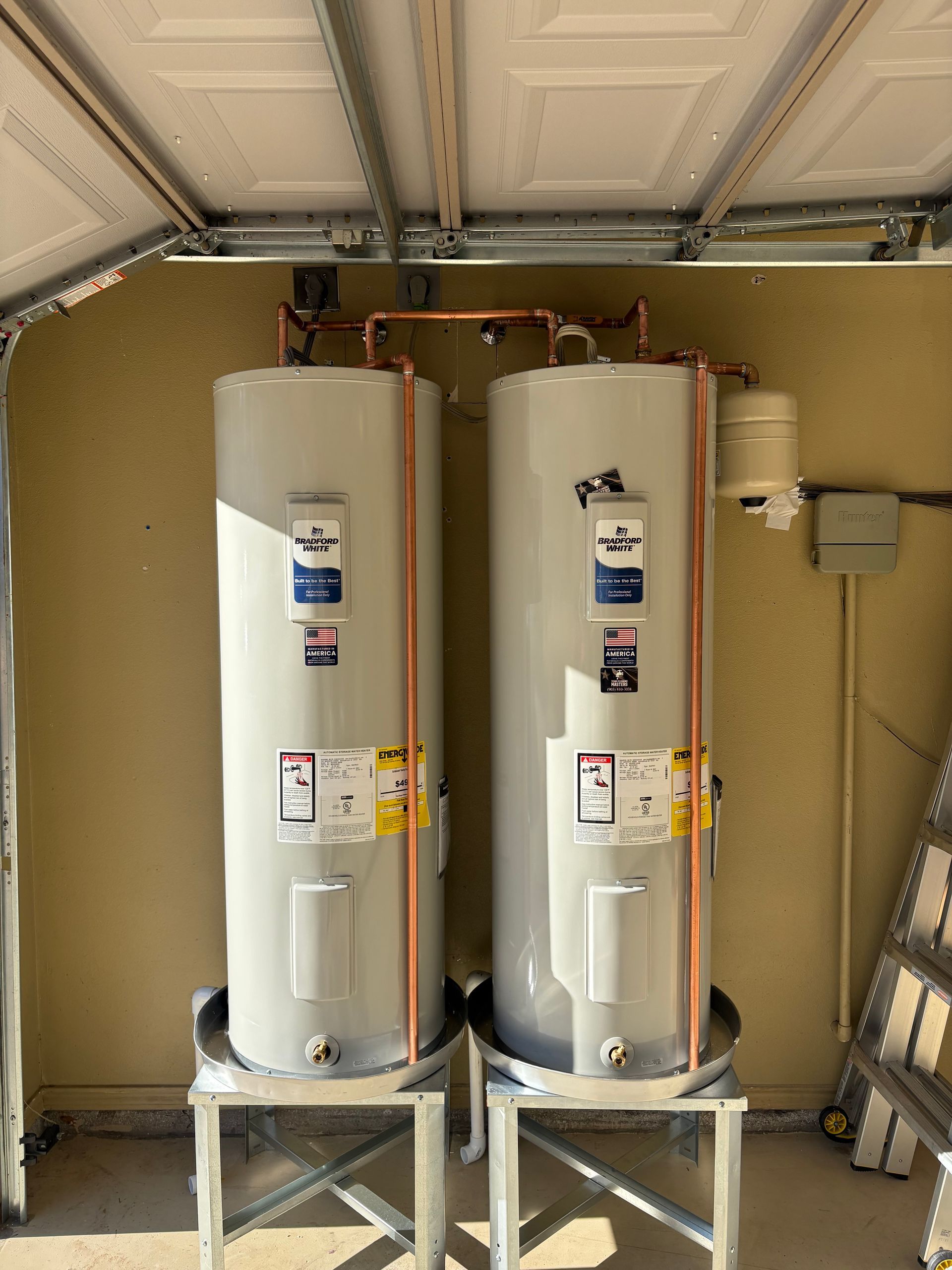
Water heater installation follows specific code requirements covering combustion air supply for gas units, electrical circuits sized for heating element loads, temperature-pressure relief valve discharge piping, drain pan installation where leaks could damage structures, and seismic strapping in applicable locations. Installers remove old equipment, verify that gas lines or electrical circuits meet new equipment specifications, install code-compliant venting systems, connect supply and distribution piping with proper shutoff valves, and test all safety devices before placing the system in service. Traditional tank installations require level platforms that support filled weight, while tankless systems need wall mounting that handles vibration and proper clearances for service access.
After Texas Plumbing Masters completes installation, your water heater delivers consistent temperature at every fixture without running out during peak demand periods, recovery rates keep pace with household usage patterns, and energy costs drop when upgrading to high-efficiency equipment. You'll notice that multiple showers can run consecutively without waiting for reheat cycles, dishwashers and washing machines receive properly heated water throughout their cycles, and temperature remains stable rather than fluctuating as heating elements cycle on and off. New installations also eliminate safety concerns from deteriorated venting systems, corroded relief valves that won't open under pressure, and outdated equipment lacking modern temperature controls.
Installation service includes hauling away old equipment, obtaining required permits, coordinating inspections, and explaining new system operation and maintenance requirements. Warranty coverage depends on professional installation that meets manufacturer specifications, which is why documentation proving code-compliant work protects your investment if equipment problems develop within warranty periods.
What Property Owners Usually Ask
Homeowners considering water heater replacement typically want guidance on equipment selection and what the installation process involves before committing to the investment.
What size water heater does a home need?
Tank sizing depends on the number of bathrooms, occupants, and simultaneous hot water demands, with typical homes requiring 40-50 gallon tanks for 2-3 people or 50-80 gallons for larger households. Tankless systems get sized by calculating maximum flow rate in gallons per minute across all fixtures that might run simultaneously and the temperature rise needed to reach desired output temperature from groundwater temperature in Jacksonville.
How do tankless and traditional tank water heaters compare?
Tankless systems provide endless hot water on demand, occupy less space, and offer longer equipment lifespan but cost more upfront and require larger gas lines or significant electrical upgrades. Traditional tanks cost less initially, work with existing utilities, and provide simpler operation but have limited capacity and higher standby energy losses.
When can water heater installation be completed?
Most residential installations complete within 4-6 hours for direct replacements using the same fuel type and similar capacity. Upgrades requiring gas line modifications, electrical panel upgrades, or venting changes may need additional time for utility work and inspection scheduling.
Why do water heater installations require permits?
Permits ensure installations meet safety codes for venting, combustion air, electrical connections, gas piping, and relief valve discharge. Inspections verify proper installation before equipment operates, protecting homeowners from safety hazards and ensuring warranty coverage remains valid.
What maintenance extends water heater lifespan?
Annual flushing removes sediment that causes tank corrosion and element failure, testing relief valves ensures safety systems function, replacing anode rods on schedule prevents tank corrosion, and descaling tankless units maintains efficiency. Jacksonville water hardness makes maintenance particularly important for preventing mineral-related failures.
Texas Plumbing Masters installs traditional and tankless water heaters throughout Jacksonville and neighboring communities, helping homeowners select appropriate equipment and ensuring installations meet all code requirements for safe, efficient operation. Contact our team to schedule a consultation and receive installation recommendations based on your home's hot water needs.