
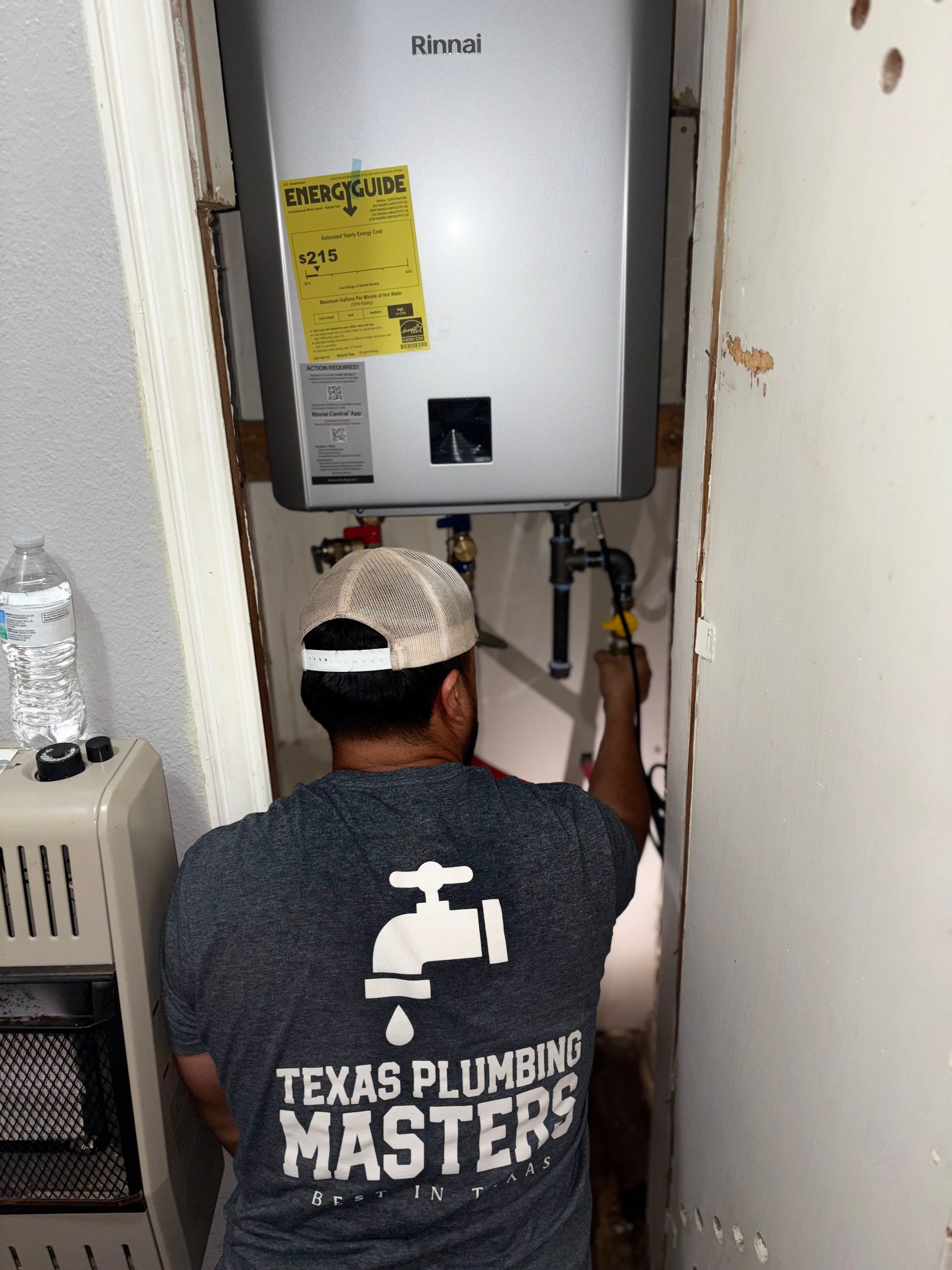

Hot Water Restored Through Targeted Repairs
Water Heater Repair in Jacksonville for inconsistent temperatures, unusual noises, and heating failures
Hot water that runs out halfway through a shower or arrives at unpredictable temperatures indicates water heater problems that diagnostics can usually identify within minutes. Water heater repair addresses failed heating elements, malfunctioning thermostats, sediment accumulation, and valve problems in both traditional tank systems and tankless units. Texas Plumbing Masters responds to water heater failures across Jacksonville, Bullard, Mount Pleasant, and surrounding areas when households suddenly lose hot water entirely or notice performance declining over weeks as components deteriorate. Traditional tank water heaters accumulate mineral sediment at the bottom over years of operation, insulating heating elements from water and forcing them to overheat until they fail, while tankless systems develop scale buildup on heat exchangers that restricts flow and reduces heating capacity.
Repair diagnostics begin with testing electrical supply to heating elements or gas flow to burner assemblies, checking thermostat calibration, measuring water temperature at multiple flow rates, and inspecting relief valves and drain valves for proper operation. Plumbers also evaluate how much sediment has accumulated because extensive buildup sometimes makes tank replacement more economical than repairs that only address immediate symptoms.
Schedule water heater diagnostics to identify why performance has declined and what repairs will restore function.
What Water Heater Repairs Actually Accomplish
Water heater repair focuses on restoring consistent hot water delivery by replacing failed electrical elements, recalibrating or replacing thermostats, flushing sediment that reduces tank capacity, and testing safety components like temperature-pressure relief valves. Tank systems typically fail when lower heating elements burn out from sediment contact, when thermostats drift out of calibration and allow water to overheat or stay cold, or when dip tubes deteriorate and allow cold inlet water to mix with hot water at the top of the tank. Tankless systems experience different failure patterns including scale accumulation on heat exchangers, ignition problems, and flow sensor malfunctions that prevent burners from firing.
After repairs, your water heater delivers hot water at consistent temperatures for as long as your usage patterns require, without the temperature dropping midway through showers or laundry cycles. Tank systems recover more quickly between high-demand periods, and unusual noises like popping or rumbling stop once sediment is flushed. Tankless units maintain output temperature even when multiple fixtures run simultaneously, and error codes that previously appeared on digital displays no longer interrupt operation. You'll also notice lower energy bills when heating elements work efficiently without fighting through sediment insulation or when thermostats maintain setpoint temperatures without constant cycling.
Repair decisions sometimes involve comparing the cost of fixing an aging system against replacement options, particularly when tank corrosion appears or multiple components have failed. Your plumber should provide honest assessments of remaining service life so you can make informed decisions about investing in repairs versus upgrading equipment.
Questions Before Starting Your Project
Homeowners typically want to understand what's involved in water heater repairs and how to evaluate whether fixing or replacing makes more sense financially.
What causes water heaters to make popping or rumbling noises?
Popping sounds come from sediment buildup at the tank bottom, where minerals settle and harden into layers that trap water beneath them. When this trapped water boils, steam bubbles force their way through the sediment layer, creating popping or rumbling sounds that indicate the tank needs flushing.
How long do water heater repairs typically last?
Element and thermostat replacements should last 3-5 years on traditional tanks, while flushing sediment and replacing relief valves may need repeating every 2-3 years depending on water hardness. Tankless repairs involving scale removal and component replacement typically provide 3-5 years of additional service.
When does water heater replacement make more sense than repairs?
Replacement becomes advisable when repair costs exceed 50% of new equipment cost, when tanks show visible corrosion or leaking, when systems are beyond 10-12 years old for traditional tanks or 15-20 years for tankless units, or when repeated repairs indicate widespread component deterioration.
Why does hot water run out faster than it used to?
Reduced capacity results from sediment filling the lower portion of tank water heaters, failed heating elements that don't maintain temperature, or thermostat problems that prevent water from heating to proper temperatures. Tankless systems lose capacity when scale restricts flow through heat exchangers or when burners fail to ignite consistently.
What maintenance prevents future water heater problems?
Annual flushing removes sediment before it hardens and causes element failure, testing relief valves ensures safety systems function, inspecting anode rods on tank systems prevents corrosion, and descaling tankless units maintains heat exchanger efficiency. Jacksonville water contains enough minerals that annual maintenance significantly extends equipment life.
Texas Plumbing Masters diagnoses and repairs water heaters throughout Jacksonville, and neighboring communities, providing honest recommendations about repair versus replacement options based on system condition and remaining service life. Call to schedule water heater service when you notice performance problems or complete heating failures.